

We tested casino bonus sites from a British player’s point of view, with a close eye on the small print, the payment flow, and the rules that sit behind each offer. The topic sounds simple, yet the details matter once you bring in the UK Gambling Commission, GAMSTOP self-exclusion, and the way remote gambling is treated in Great Britain.
Our team spent 8 hours checking how these sites present offers, what they ask for at the deposit stage, and how clearly they set out withdrawal rules and play conditions. We looked at debit cards, PayPal, Apple Pay, and Paysafecard first, since these are the methods most often used by British players, and we kept an eye on the lines that can trip people up!
We are not treating this as a brand pitch. Casino bonus sites are a broad category, and the real question is how they behave when a player wants a welcome offer, a reload deal, or just a fair route into online play without getting caught by vague wording.
Bonus sites basics
Casino bonus sites are pages or platforms that focus on offers tied to online casino play. In Great Britain, that means remote gambling products that may sit on a website, a mobile phone, or another online service under UKGC rules. The offer may look generous, yet the value usually depends on the play conditions, the payment method used, and the games that count.
We found that the best first question is not “how big is the bonus?” but “what does the player need to do to use it properly?” That shift saves time. It also stops people from chasing a headline figure that turns out to be awkward in practice.
These sites often lean on welcome deals, free spins, cashback, or matched deposits. Some keep the pitch clean and easy to read, while others bury key points in long blocks of text that take real effort to work through.
UKGC rules
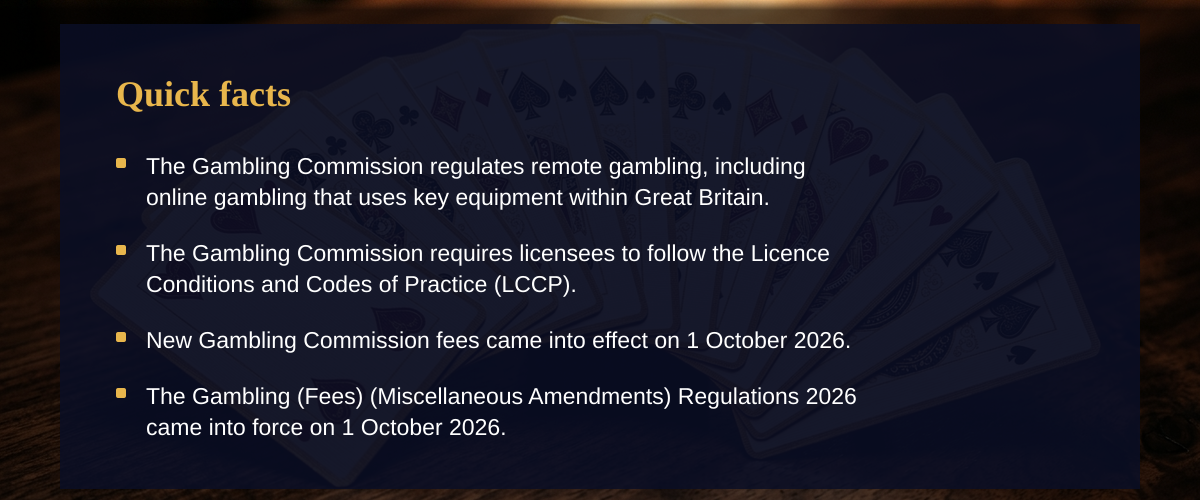
The Gambling Commission is the gambling regulator in Great Britain. It issues personal gambling licences and gambling operating licences, and it regulates remote gambling, including online gambling that uses key equipment within Great Britain. Its powers sit in the Gambling Act 2005, as amended by the Gambling (Licensing and Advertising) Act 2014.
For casino bonus sites, that framework matters because an online casino operator needs a remote casino operating licence if it offers gambling facilities to consumers in Great Britain online or if part of its remote gambling equipment is based in Great Britain. A remote casino game host operating licence is also required for businesses that provide casino game-hosting services to consumers in Great Britain online.
The Commission also requires licensees to follow the Licence Conditions and Codes of Practice, usually known as the LCCP. That is the rulebook behind much of what players see in the open: clear terms, safer gambling tools, and a line between marketing language and the real experience of using the site.
The fee side changed too. New Gambling Commission fees came into effect on 1 October 2026, and the Gambling (Fees) (Miscellaneous Amendments) Regulations 2026 came into force on the same day. The UK government said the changes were intended to take effect from that date.
Offer shapes
Casino bonus sites rarely sell one thing only. They may lead with a welcome package, then point to reload offers, loyalty rewards, or game-specific promotions that apply to slots, live tables, or a sports crossover tied to football and horse racing. The shape is familiar, yet the use cases are different.
A useful way to read them is by the job they try to do. Some offers are there to stretch a first deposit. Others are meant to keep a player active over time. A few are more about getting attention than giving clear value.
- Welcome offers tied to a first deposit.
- Free spins linked to one slot or a small group of games.
- Reload deals for repeat deposits.
- Cashback offers that return part of losses in a set form.
- Loyalty rewards aimed at regular play.
We noticed that the cleanest sites explain each deal in plain English before a player commits money. That sounds basic, yet it is where many pages start to slip. If the offer page feels hard to read, the bonus itself usually needs a closer look.
Payment routes
Payment choice shapes the whole bonus experience. Debit cards still matter most for many players in Great Britain, while PayPal, Apple Pay, and Paysafecard are common alternatives when a site supports them. Credit cards are banned for gambling in the UK, so they never enter the picture as a safe option.
The route used can affect how fast a deposit lands, how the bonus is triggered, and whether the site asks for extra checks before any withdrawal. We saw the clearest wording when operators set out payment rules in short, direct paragraphs instead of tucking them into a dense terms page.
The order of the process matters less than the clarity around it. A player should know what method is accepted, whether that method qualifies for a bonus, and whether the same route can be used later when money comes back out.
Terms reading
This is where many players lose time. Bonus terms can look short at first glance, then stretch across game rules, time windows, payment exclusions, stake rules, and game weighting. We found that the sites with the best flow did not hide the hard parts; they put them in the open and let the player decide.
The most practical habit is simple: read the offer page before the cashier page. That order saves frustration. It also helps when a site uses more than one bonus type at the same time, since the rules can change from one deal to another.
We also noticed how often language can blur the edges. A site may say a bonus is “easy” or “quick”, yet the real test is whether the player can see the play conditions, the game list, and the route to cash out without guesswork.
Safer play
Safer gambling should sit beside the offer, not behind it. GAMSTOP has been a licence condition for all gambling operators offering online gambling services to individuals in Great Britain since 31 March 2020, and it lets a person self-exclude from all gambling websites, apps and services provided by Gambling Commission-licensed online operators in Great Britain. The self-exclusion period can be 6 months, 1 year, or 5 years.
The Gambling Commission says gambling businesses must have their own self-exclusion arrangements in place. It also says they must close a self-excluded customer’s account and return any money in the account. For players, that means a bonus page should never be treated as a substitute for control tools.
GAMSTOP says bank blocks can stop card payments into online gambling accounts and in-person betting shops. That matters for players who want a stronger barrier while they step away from gambling, and it sits alongside the wider system of affordability checks that operators may use where needed.
The national support picture is broader than the casino site itself. GambleAware is a non-profit support organisation that gives practical guidance, tools, and signposting for anyone worried about gambling habits. Gambling Commission is the official regulator, and its site explains the rules, licensing, and player protection framework in Great Britain.
Tax position
For individual players, gambling winnings are not subject to UK tax. The UK imposes gambling duties on operators, not on players’ winnings. That makes the player side simpler than many people expect, especially when comparing casino bonus sites with other forms of money-making online.
We found that this often gets muddled in marketing copy, which can sound vague about what a win means in real terms. The cleanest sites avoid that problem by sticking to the bonus rules and leaving tax language out of the pitch unless it is relevant.
The practical point is straightforward. A player in Great Britain should still keep their own records for personal tracking, but the tax burden does not sit on ordinary gambling winnings in the way it would in some other markets.
Market signals
The wider market still matters when judging casino bonus sites. A 2026 government update reported betting and gaming receipts of £1,933 million for April to July 2026, up £309 million or 19% from the same period in the previous financial year. That tells us the sector remains active and watched closely.
We also saw how the language around online gambling is being used more tightly now. “Remote gambling” is the official UK regulatory term for online gambling and gambling by phone, and in Great Britain online casino products fall under those rules when offered through a website, mobile phone, TV, or other online service.
That matters because bonus pages are not floating free of regulation. They sit inside a system that links advertising, software, payment rules, and player protection into one space.
Reading habits
Some bonus pages are built for speed. Others ask for patience. We found that the better ones reward a calm read, especially when the player is comparing football-focused promotions with a casino offer or looking at horse racing in the same account area.
One common trap is treating every bonus as if it suits every type of play. It does not. A slot-heavy welcome deal may be poor value for someone who prefers table games, and a short time window may be awkward for a player who only logs in at weekends.
If the site folds in sports, casino, and account offers on one page, the reader needs a little extra care. The content should still be clear. Mixed promotions can be useful, but they can blur the edge between a real deal and a shiny distraction.
We also noticed how payment wording and bonus wording can pull in different directions. A player may see a clean cashier, then hit a tougher route when the bonus is in play. That is why the small print deserves more attention than the banner.
Our take
We also checked lucky riches during this round of reading, mainly to see how a bonus-focused site frames its offers for a British audience and how the path from sign-up to play is presented. The useful lesson was not about one brand alone; it was about how much easier it is to trust a page when the rules sit near the offer and the language stays plain.
One detail we did not like was the way some sites still make readers work too hard for the basics. We did not like that several bonus pages split key points across too many places, which makes a simple offer feel busier than it needs to be.
That said, the better casino bonus sites do three things well. They tell the player what the deal is, what method can be used, and what the rules look like if money or self-exclusion becomes part of the picture. When those lines are clear, the whole experience feels easier to judge.
For anyone in Great Britain, the best habit is to treat the bonus as one part of the site, not the whole story. Read the deal, check the payment route, keep GAMSTOP and affordability tools in mind, and use independent help if gambling stops feeling like fun. The NHS — Gambling addiction support page is a public-health resource with advice, signs to watch for, and routes to further help.
Our short view is this: casino bonus sites are worth reading carefully, but only when the rules are clear and the player keeps control first. The offer may look lively, yet the sensible choice is still the one that fits the way you want to play.
Dodaj komentarz