![[awatar]](/static/gen/avatars/dylanjackson783/m0.png?2 "dylanjackson783")
If you own property in the Tree Section, you've probably wondered what your lot alone would be worth to a builder or developer — separate from whatever house currently sits on it. It's one of the most common questions we hear from homeowners exploring their options to sell my house Manhattan Beach. The answer depends on more than just square footage, and understanding how Tree Section land is actually valued can change how you think about selling.
Tree Section Pricing, By the Numbers
The Tree Section sits east of Grand Avenue, generally between Sepulveda Boulevard and Valley Drive, and it's zoned almost exclusively for single-family residential use. Recent market data gives a clear picture of where pricing currently stands:
- Median sale price in the Tree Section has been running around $3.5 to $4.2 million, with meaningful year-over-year swings depending on which specific sales close in a given month
- Price per square foot typically falls in the $1,480 to $1,924 range, generally lower than the Sand Section's per-square-foot pricing but still reflecting one of the more expensive residential markets in the South Bay
- Median days on market have ranged from roughly 26 to 59 days, with well-priced homes often receiving offers within the first two to three weekends
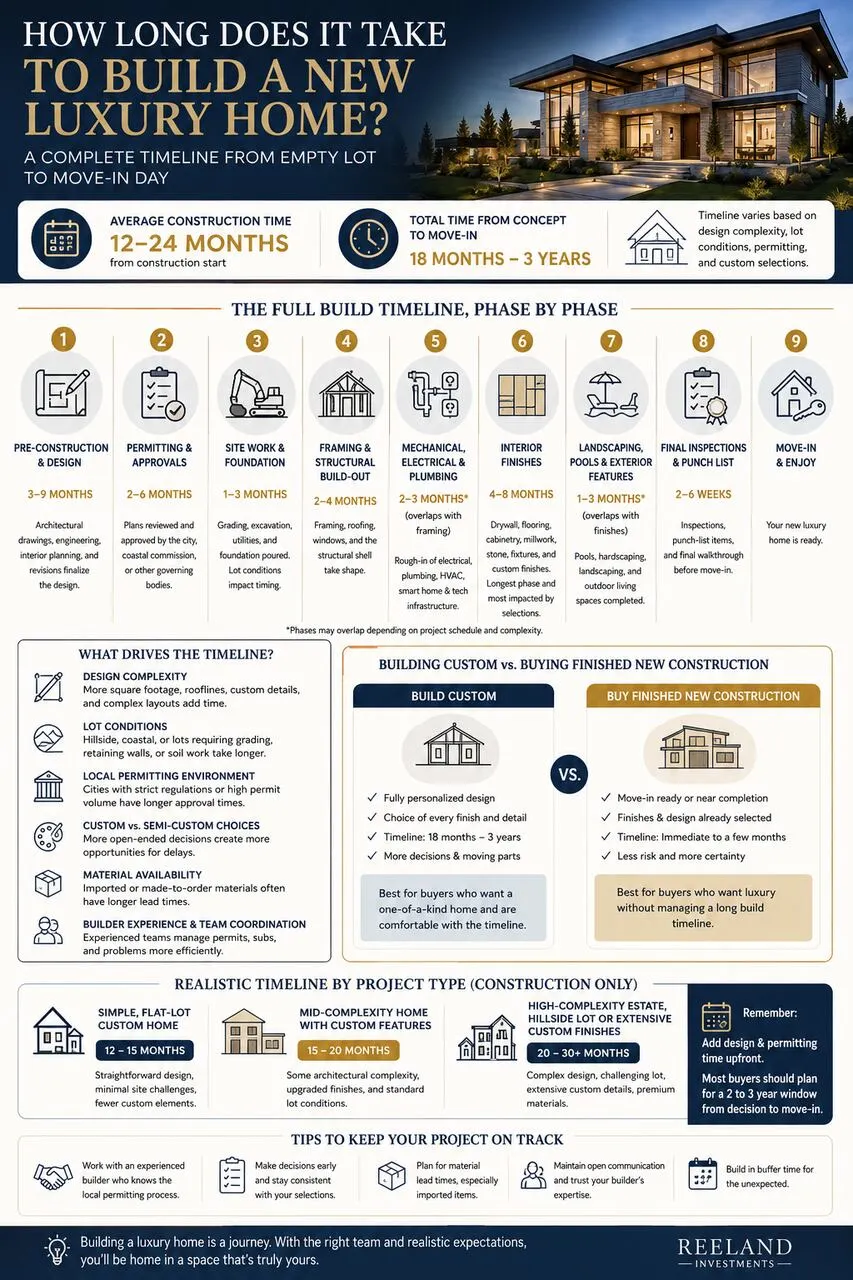
- New construction on Tree Section lots typically runs 3,000 to 4,000 square feet on 4,000 to 5,000 square foot lots — though older homes on the same size lots are often considerably smaller
That price-per-square-foot figure matters, but it only tells part of the story when you're trying to isolate what the land itself is worth.
Why Tree Section Land Value Isn't Just About Home Size
Unlike the Sand Section, where land scarcity alone drives much of the pricing, Tree Section lot value is shaped by a combination of factors:
Lot size and buildable potential. Tree Section lots tend to be larger than typical Sand Section parcels, generally in the 4,000 to 5,000+ square foot range. A larger lot supports a larger new-construction footprint under the city's Buildable Floor Area standards, which directly affects what a builder is willing to pay for the land alone.
Location within the section. Tree Section pockets closer to the beach — particularly in the American Martyrs area — consistently command a premium over lots farther inland, even at similar sizes. Proximity to Live Oak Park and the neighborhood's tree-lined streets also plays into buyer demand, since much of the Tree Section's appeal is built around its family-friendly, walkable character.
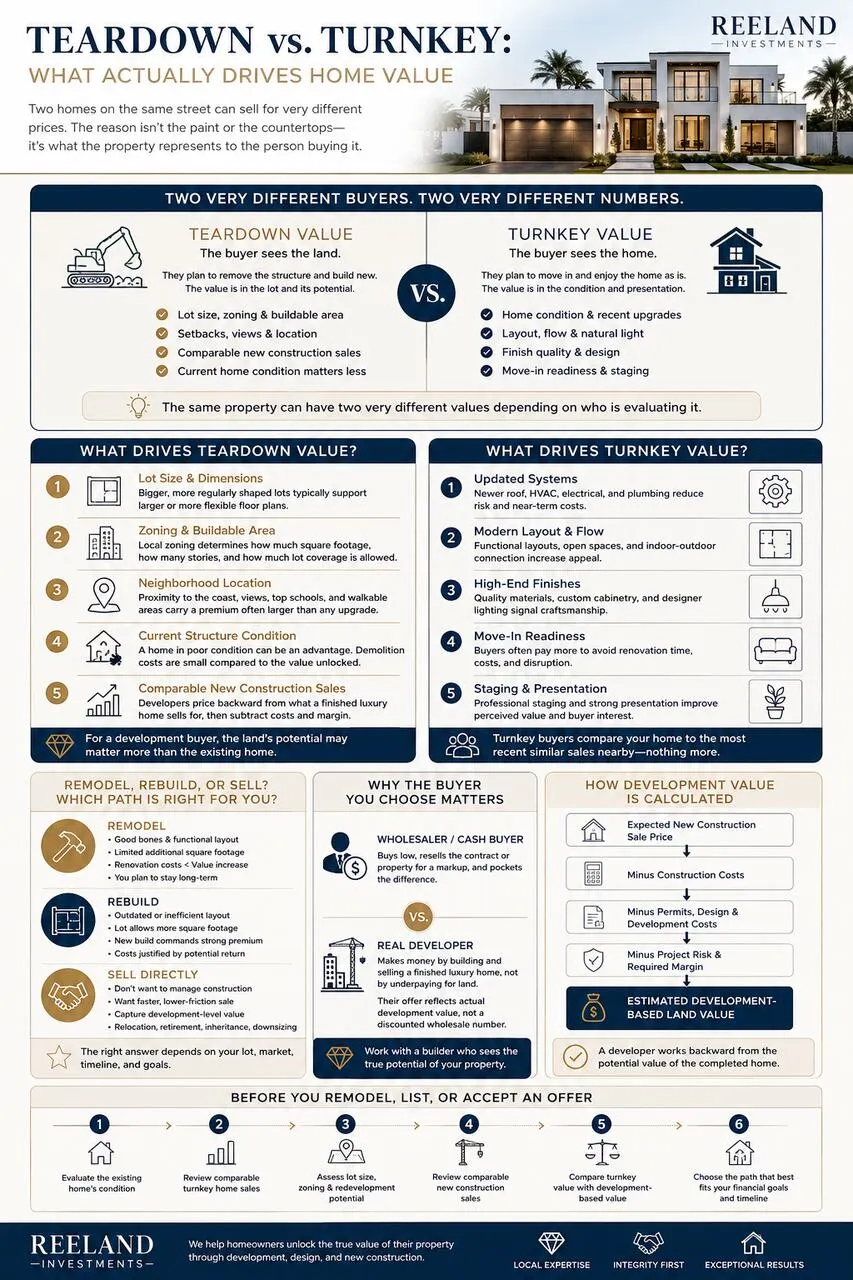
Condition of the existing structure. Older, smaller homes on generously sized lots are often valued by builders primarily for their land, with the existing structure treated as a teardown rather than a selling point. In these cases, the sale price reflects land value plus modest structure value, not a renovated-home premium.
Consistency of demand. The Tree Section's resale behavior has been notably steady compared to the Sand and Hill Sections, driven largely by long-hold family buyers rather than speculative or investment purchases. That steadiness tends to support reliable land values even when other parts of the market see more volatility.
What This Means If You're Considering Selling
If your Tree Section property is older or hasn't been updated in years, it's worth understanding that your home's value to a builder may have very little to do with its current condition. A dated 1960s or '70s home on a full-sized Tree Section lot can still command a strong offer, because the buyer is really pricing the land, the zoning, and the buildable potential — not your kitchen or bathrooms.
This is a critical mindset shift for homeowners who assume they need to renovate before selling. In many cases, spending money to update a home that a buyer intends to demolish anyway doesn't improve your outcome — it just adds cost without meaningfully changing what the property is actually worth to the eventual buyer.
How to Get a Realistic Read on Your Lot's Value
Because Tree Section land value depends on lot size, location within the neighborhood, and current buildable floor area allowances — not just a citywide price-per-square-foot average — a generic online estimate rarely captures what your specific property is actually worth. The most reliable way to understand your lot's true value is a direct comparison against similar-sized parcels that have recently sold or been developed nearby, ideally reviewed by someone who tracks Tree Section land transactions specifically.
How Reeland Investments Can Help
At Reeland Investments, we evaluate Tree Section properties the way builders and developers actually do — starting with the land itself, its size, its buildable potential under current city standards, and its specific location within the neighborhood. Whether your home needs significant work or is simply outdated relative to newer construction nearby, we can help you understand what your lot is realistically worth in today's market.
If you're weighing your options to sell my house fast Manhattan Beach, or you'd like a straightforward, no-pressure conversation about your Tree Section property's value, reach out to Reeland Investments. And if speed and certainty matter more than testing the open market, we also work with homeowners interested in options to sell your home fast for cash in Manhattan Beach.
Final Thoughts
A Tree Section lot's value is about far more than the house sitting on it — size, location, and buildable potential all play a role that a simple per-square-foot number can't fully capture. If you're ready to understand what your property is really worth, or you want to explore your options to sell my house Manhattan Beach on your own timeline, reach out to Reeland Investments for a clear, data-backed conversation.