![[awatar]](/static/gen/avatars/niklassvensson/m0.png?3 "NiklasSvensson")
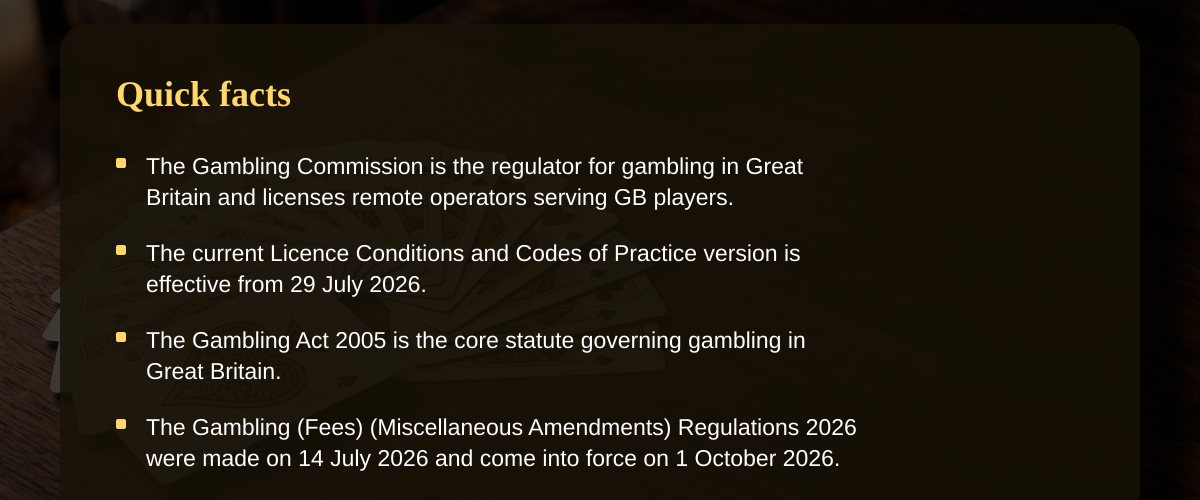
The gambling sector in Great Britain operates under one of the most sophisticated regulatory frameworks globally, overseen by the Gambling Commission. This body licenses and regulates businesses, including the National Lottery, while providing guidance to ensure fair and transparent operations. The industry contributes significantly to the national economy, with remote casino, betting, and bingo accounting for 46% of the Great Britain market in the year to March 2025. During this period, online gambling generated £7.8 billion in gross gambling yield, illustrating a robust demand for digital entertainment. Total bets and spins reached 26.Selecting a high-quality platform involves evaluating several technical and regulatory factors that define the player experience. The Gambling Act 2005 remains the core statute governing these activities, ensuring that every operator targeting the British public holds a valid operating licence. Recent updates to the Licence Conditions and Codes of Practice (LCCP), effective from 29 July 2026, have further tightened requirements regarding player safety and financial transparency. Compliance with these standards is non-negotiable for any entity wishing to be classified as a reputable provider. Operators must also navigate the Gambling (Fees) (Miscellaneous Amendments) Regulations 2026, which come into force on 1 October 2026.While the volume of active accounts reached 24.4 million in the year to March 2025, the market has seen shifts in consumer behaviour and registration trends. New registrations fell by 4.1% to 34 million during that timeframe, suggesting a maturing market where existing users remain active rather than a constant influx of new participants. Identifying the best slots casino requires an understanding of how these platforms balance entertainment with the strict player protection mandates set by the regulator. Those seeking a diverse gaming environment often explore various licensed platforms, such as the magicwin casino, which provides access to a range of software titles within the broader digital market. The total gross gambling yield for the entire industry in Great Britain reached £16.8 billion in the year to March 2025.Financial security and the efficiency of transactions serve as primary indicators of a platform’s reliability. In the British market, debit cards remain the dominant payment method, followed closely by PayPal and Apple Pay. The use of credit cards for gambling has been prohibited in the United Kingdom for several years to prevent the use of borrowed funds for wagering. Operators are required to conduct affordability checks to ensure that participation remains within a customer’s financial means. Customer accounts held approximately £1 billion in the year to March 2025, representing a 6.9% decrease year on year.
Regulating the digital gaming environment in Great Britain
The Gambling Commission maintains a rigorous oversight regime to ensure that the three licensing objectives of the Gambling Act 2005 are met: preventing gambling from being a source of crime, ensuring gambling is conducted in a fair and open way, and protecting children and vulnerable persons. The LCCP serves as the primary tool for enforcement, with the most recent version taking effect on 29 July 2026. These codes dictate everything from how games are displayed to the mandatory integration of self-exclusion tools like GamStop. Any remote casino operating in Great Britain must provide clear links to these resources, ensuring that players can manage their activity effectively.Operational data indicates a steady rise in the financial performance of the online sector despite increased regulatory pressure. Online Gross Gambling Yield was recorded at £1.45 billion for the period between January and March 2025, which represents a 7% increase year on year. This growth continued into the following quarter, with the figure reaching £1.49 billion for April to June 2025. Such figures suggest that the best slots casino platforms are those that can adapt to changing legal requirements while maintaining a service that attracts consistent usage. The regulatory environment is designed to be proactive, with the Gambling Commission publishing updates to the LCCP twice in 2026 alone.Taxation also plays a role in the structure of the British market, though the impact on the individual player is minimal. In Great Britain, winnings from gambling are generally not taxed for the customer. Instead, the fiscal burden is placed on the operators through Remote Gaming Duty and other industry-specific levies. This structure makes the UK market highly attractive for players, as the advertised prizes and payouts are received in full. However, the costs associated with licensing and compliance mean that operators must maintain high volumes of activity to remain profitable. The total UK gambling market reported a gross gambling yield of £4.3 billion in Q2 2025.
Implementing stake limits and player protections

One of the most significant changes to the digital landscape in recent times is the introduction of mandatory stake limits on online slots. As of 9 April 2025, a maximum stake limit of £5 was implemented for all adults. This was followed on 21 May 2025 by a stricter limit of £2 for adults aged 18 to 24. These measures were introduced to mitigate the risk of significant financial loss in short periods, particularly among younger demographics who may be more susceptible to impulsive play. The implementation of these limits is a mandatory requirement for all holders of a Gambling Commission operating licence.Beyond stake limits, the industry relies on a variety of technical tools to monitor and intervene when risky behaviour is detected. The best slots casino platforms use sophisticated algorithms to identify patterns that might indicate a loss of control.
- Automated triggers that alert staff when a player’s spending deviates significantly from their established history.
- Mandatory reality checks that pause gameplay at set intervals to inform the user of their time spent online.
- Integration with the GamStop national self-exclusion database, preventing excluded individuals from accessing any licensed site.
- Clear displays of net position, showing exactly how much a player has won or lost during a single session.
These features are not merely optional extras but are central to the licensing conditions that govern the British market. The failure to maintain these standards can result in significant fines or the revocation of an operating licence.The number of active online accounts at regulated sites saw a slight decline in 2026, dropping from 23.4 million to 22.52 million in the second quarter. This decrease may be attributed to the combined effect of stricter affordability checks and the implementation of the aforementioned stake limits. Despite the reduction in account numbers, the efficiency of the remaining accounts appears higher, as evidenced by the record-breaking 26.1 billion spins and bets recorded in the same period. The industry continues to balance these protective measures with the need to provide a competitive entertainment product. The £5 limit remains the standard for the majority of the adult population.
Evaluating game variety and software providers
The diversity of games available to British players is vast, ranging from traditional three-reel fruit machines to complex video slots with multiple paylines and interactive bonus features. Software developers such as NetEnt, Microgaming, Playtech, and Evolution Gaming are prominent fixtures in the UK market. These providers must also adhere to technical standards set by the Gambling Commission, ensuring that their Random Number Generators (RNG) are tested by independent laboratories. This testing guarantees that every spin is truly random and that the Return to Player (RTP) percentages are accurate as advertised.When assessing a platform, the breadth of its library is often a primary consideration. A top-tier provider typically offers several hundred, if not thousands, of unique titles to cater to different preferences.
- Classic slots that mimic the aesthetic and mechanics of physical machines found in bookmakers or arcades.
- Progressive jackpot slots where a portion of each bet contributes to a collective prize pool that can reach millions of pounds.
- Megaways titles that utilize a random reel modifier to change the number of symbols on each spin, offering up to 117,649 ways to win.
- Themed slots based on popular British culture, including football, horse racing, and famous television shows.
The variety ensures that the platform remains engaging for a wide demographic, from casual players to those with more specific interests in high-volatility games. The average RTP across the most popular titles in the UK market is 96%, which is generally considered standard for the industry.The technical performance of these games is equally important. In a market where mobile usage is dominant, slots must be optimised for various devices and screen sizes. Most modern titles are developed using HTML5 technology, allowing for seamless transitions between desktop and smartphone browsers. This accessibility is a major factor in the continued growth of the remote casino sector, which generated £2 billion in Q2 2025. The shift toward mobile-first development reflects the broader consumer trend of seeking entertainment on the move. The quality of animations and the speed of loading times are frequently cited as key metrics in player satisfaction reports.
Analysing payment methods and withdrawal speeds
The financial infrastructure of an online casino is a critical component of its overall service quality. In Great Britain, the regulatory framework ensures that player funds are protected, often requiring them to be held in accounts separate from the company’s operational capital. This ensures that in the event of insolvency, player balances can be returned. Transactional speed is a major competitive advantage, with many players favouring sites that offer "instant" or "same-day" withdrawals. The processing time for these transactions often depends on the chosen payment method and the internal verification procedures of the operator.Debit cards, particularly those issued by major UK banks, are the most frequently used method for both deposits and withdrawals. While they are reliable, they sometimes lag behind e-wallets in terms of speed. PayPal, for example, is highly valued for its ability to process withdrawals within minutes once the casino has approved the request. Apple Pay has also seen a significant rise in adoption due to its integration with mobile devices and the added security of biometric authentication. The use of Paysafecard provides an option for those who prefer not to share their primary banking details directly with the gaming site. The total value of funds held in customer accounts was £1 billion as of March 2025.Withdrawal limits and fees are areas where platforms often differ. A high-quality operator will generally not charge fees for standard transactions, though some may apply costs for international transfers or specific niche methods. The payout speed for e-wallets in the UK is currently 24 hours on average, which is slightly below the market average when compared to newer, high-speed banking interfaces. Transparency regarding these timelines is a requirement under the LCCP, and players must be informed of any delays or additional documentation required for "Know Your Customer" (KYC) checks. The Gambling Commission mandates that these checks be completed efficiently to prevent money laundering without unduly hindering legitimate players. Documentation usually includes a valid UK driving licence or passport and a recent utility bill.
Prioritising responsible gambling and support
Responsible gambling is the cornerstone of the British regulatory model. The industry has moved away from purely reactive measures toward a culture of prevention and support. All licensed operators in Great Britain are required to participate in the GamStop scheme, which allows individuals to exclude themselves from all licensed gambling websites with a single registration. This system is a powerful tool for those who recognise that their gambling is becoming problematic. Platforms must provide easy access to support organisations such as GamCare and BeGambleAware.Operators are also evaluated on their ability to offer internal tools for self-management. These include the ability to set daily, weekly, or monthly deposit limits, which are often the first line of defence against overspending. Time-out features allow players to take a short break from the site, ranging from 24 hours to six weeks. For a more permanent solution, individual site self-exclusion is also available. The effectiveness of these tools is monitored by the Gambling Commission, which expects operators to actively encourage their use rather than hiding them in difficult-to-find menus. The goal is to ensure that the £7.8 billion generated by the online sector comes from sustainable and safe participation.Public awareness campaigns have also played a role in shaping the current environment. The "Take Time to Think" initiative is a prominent example of how the industry and regulators collaborate to promote safer play. These efforts are reflected in the data, where despite high levels of participation, the rates of severe gambling harm have remained relatively stable according to recent health surveys. The integration of these social responsibility measures is what distinguishes a top-tier slots casino in the UK from offshore entities that do not adhere to the same rigorous standards. The commission continues to advise and provide guidance to ensure these standards evolve alongside new technologies. The 2026 LCCP updates specifically address the need for clearer communication regarding these support tools.
Future trends in the British slots market
The landscape of online slots is expected to continue its evolution as new technologies and regulatory adjustments emerge. One area of focus is the potential for further personalisation through artificial intelligence, which could allow platforms to tailor game suggestions and safety interventions to individual user profiles. However, any such advancement must be balanced against privacy concerns and the strict data protection laws applicable in the UK. The industry is also seeing a rise in "social" elements within slots, such as tournaments and community-based bonuses, which aim to replicate the communal atmosphere of land-based venues. The remote casino sector saw a 2% year-on-year increase in yield during the April to June 2025 period.Regulatory changes will also remain a constant factor. The Gambling Commission has signaled its intention to keep the LCCP under frequent review to address emerging risks, such as those posed by high-speed gameplay mechanics and aggressive marketing tactics. The 2026 fee amendments suggest that the cost of regulation is increasing, which may lead to further consolidation within the market as smaller operators struggle to keep pace with compliance costs. Nevertheless, the scale of the Great Britain market ensures it remains a primary destination for global gaming companies. The number of active accounts, while fluctuating, remains significantly high at 22.52 million.Finally, the convergence of sports betting and casino gaming continues to deepen. Many of the most successful platforms in the UK provide a unified experience, allowing users to switch between horse racing markets and slot games with a single balance. This cross-sell strategy is a major driver of the £4.3 billion gross gambling yield reported in Q2 2025. As the market moves toward 2027 and beyond, the emphasis will likely remain on enhancing the user experience through faster technology while simultaneously strengthening the safeguards that protect the most vulnerable participants. The industry remains a vital component of the national economy, supported by a framework that prioritises fairness and safety above all else. The Gambling Commission remains the central authority in maintaining this equilibrium.<
